
FCSS + MARETO
FCSS Reporting Software for Alberta Municipalities and Programs
Mareto can be configured around how your FCSS office actually works. Capture the information needed for annual FCSS reporting while also supporting program data, forms, referrals, outcomes, case management and your own local reporting needs.
Start with FCSS reporting, then build from there. The goal is fewer disconnected systems, less duplicate data entry and information your team can actually use throughout the year.
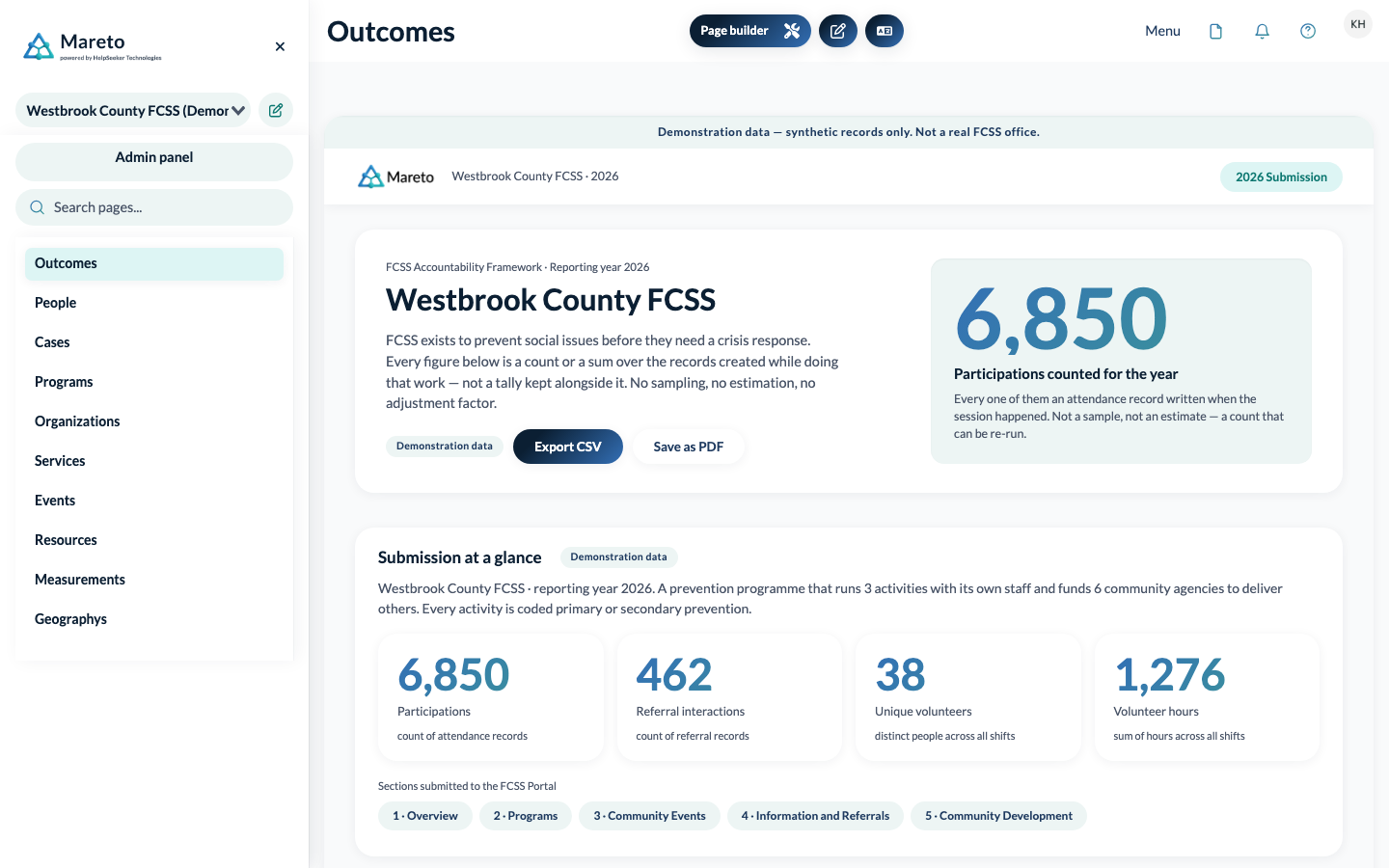
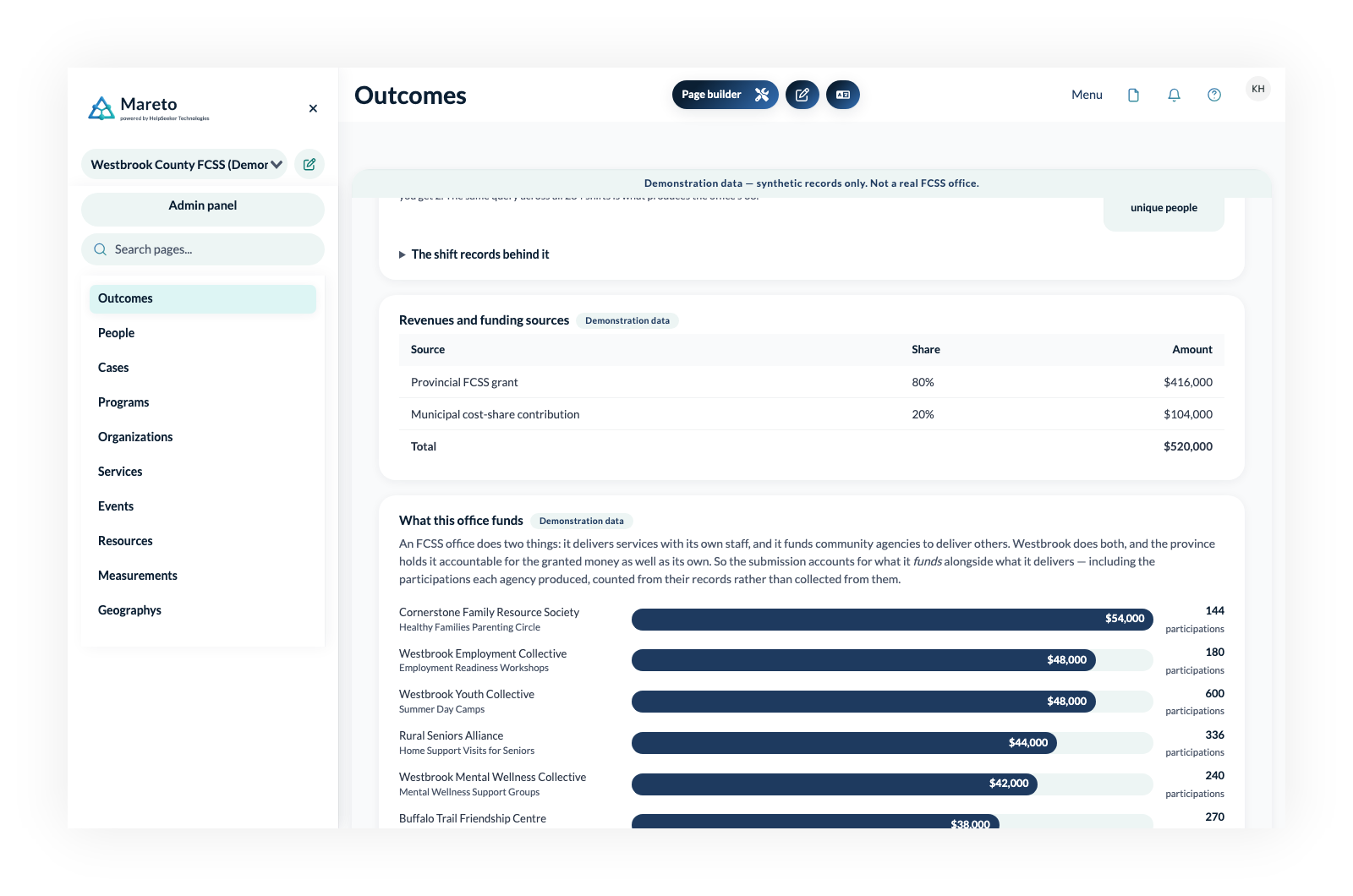
Demonstration data. An FCSS reporting view organized in the same order as the annual submission. Westbrook County FCSS is a fictional community and every figure shown is synthetic.
CONFIGURABILITY
Made to fit your FCSS office
Every FCSS office collects and manages information differently. Mareto is configurable, so your setup can reflect your programs, workflows, forms, staff roles and reporting needs instead of forcing everything into a fixed template.
FCSS reporting and annual submission data
Program participation and activity tracking
Client and case management
Forms, intakes and referrals
Surveys, outcomes and follow-up
Local reporting and custom workflows
For some offices, the starting point is annual FCSS reporting. For others, Mareto can also become the place they manage client or case information, program participation, referrals, outcomes, internal forms and other local data.
Start with what you need now and expand the same system as your needs change.
FCSS REPORTING
Built for FCSS reporting, year after year
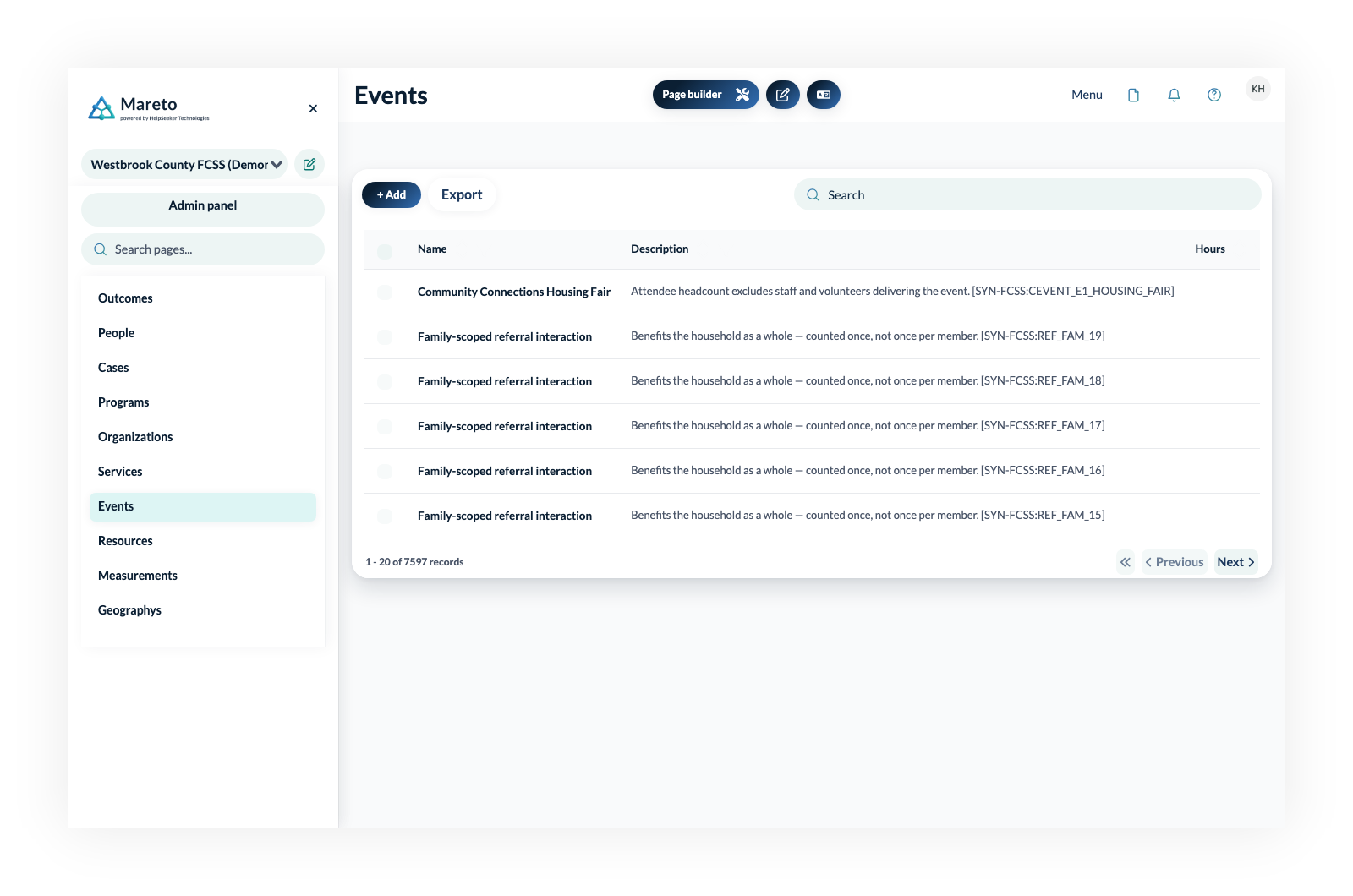
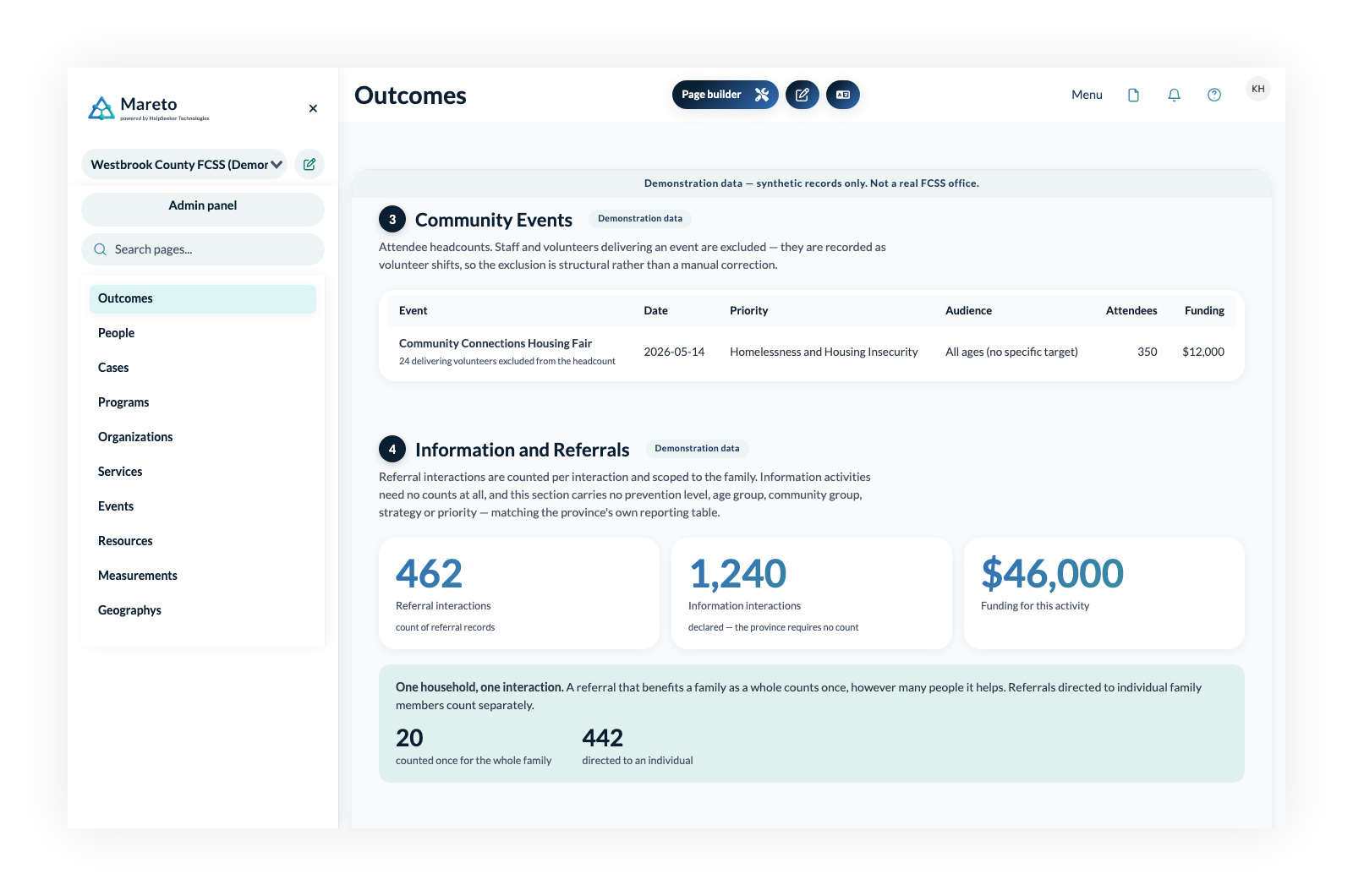
Mareto can be configured around the information Alberta FCSS programs collect for annual reporting, including the different ways participation, volunteers, referrals and survey results are reported.
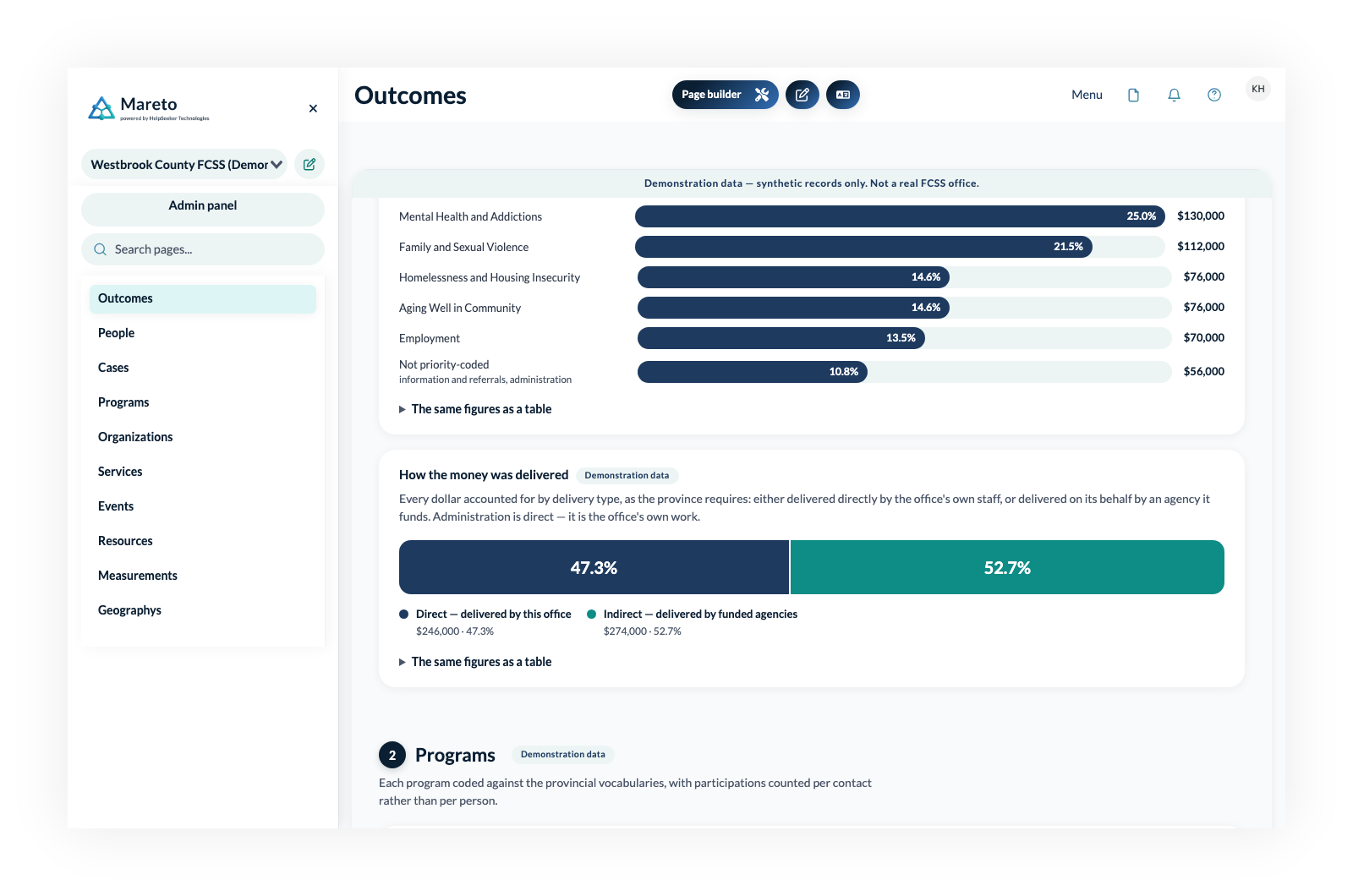
Instead of rebuilding totals at year end, the reporting information can be captured as the work happens and organized in the same five main sections used in the FCSS Portal.
FCSS asks every office to survey participants in at least one program each year, using the provincial five point agreement scale drawn from the question catalogue.
Your instruments can be built from that catalogue and attached to the programs they belong to, in post-only or pre-and-post versions depending on how the program runs.
Three of the measures you report come straight out of those responses: the percentage reporting positive change, the percentage expressing satisfaction and the percentage reporting the service was easy to access. Mareto can calculate them from the recorded responses instead of leaving them to be tallied by hand.
Where a plain five point scale does not suit your participants, faces, thumbs or simplified wording can render from the same question, so the answers still land in the same measure.

ONE SYSTEM
Collect it once. Use it across your work.
The information your team collects for FCSS reporting often has value beyond the provincial submission. The same underlying records can support program management, outcome reporting, internal dashboards, funding reports and day-to-day service delivery.
Mareto connects those needs in one configurable system so staff are not maintaining separate spreadsheets or entering the same information in multiple places just because different reports need it.
GETTING STARTED
Already collecting 2026 data? You do not have to start over.
If your 2026 information is already in spreadsheets, the FCSS Tracking Log or another system, we can work with you on a practical transition. Prior periods can be brought forward as clearly identified summaries while new activity is captured in Mareto going forward.
The setup can focus on the areas that will make the biggest difference for the rest of this year, then expand when it makes sense.
PACKAGE AND PRICING
A simpler way to get started
You do not have to build your FCSS reporting setup from scratch. We have a Mareto configuration designed around FCSS reporting requirements that can be adapted to your office and used year after year.
FCSS Reporting Package
Setup: $1,500. Licences: $40 per user, per month.
One-year term, no multi-year commitment
The FCSS package covers the preconfigured FCSS reporting setup. Broader configurations for additional programs, case management or custom workflows can be scoped based on what your organization needs.
YOUR DATA
Your data stays in Canada
Mareto runs in Canadian data centres, and each organization's records are held separately. We can work with your team to configure access based on staff roles and the information each person needs to see.
If your municipality or organization has privacy, security or FOIP questions, we are happy to walk through the setup and data flow with the appropriate people before you commit.

Start with what your team needs now
Maybe it is FCSS reporting. Maybe it is case management, program data, forms or too many spreadsheets. Show us how your team works today and we can show you what a Mareto setup could look like for your organization.